Runners talk about splits, cadence, and shoe rotation. The quiet variable that often moves a plateau is strength. Not bodybuilding for its own sake, but running-specific strength that teaches your legs to apply force quickly and repeatedly, that keeps your pelvis from wobbling at mile 18, and that spares you from the overuse injuries that sabotage a season. When a fitness trainer builds the right program, pace drops because each stride becomes cheaper and cleaner.
I have spent years coaching runners of different stripes, from new 5K racers to sub-3 marathoners and veteran trail athletes who would rather climb fire roads than touch a barbell. The successful ones share a pattern. They train their stride like a skill, build force in the right places, and treat strength work as part of running, not separate from it. Below is how a professional program comes together inside Personal training gyms and at home, and how a skilled Personal trainer or Fitness coach thinks through the process.
What you can really change with strength
Speed stems from three levers: how much force you put into the ground, how fast you do it, and how well your body transfers that force without leaking energy. Strength training improves all three. Squats and deadlifts raise peak force. Plyometrics and light lifts done quickly tighten the force curve. Anti-rotation and hip stability reduce side-to-side waste.
In practice, this turns into small but meaningful gains. A recreational 10K runner who can increase their split squat from bodyweight to holding two 20 pound dumbbells often sees 5 to 10 seconds per mile faster cruising pace after 10 to 12 weeks, assuming their running plan holds steady. An experienced half marathoner who adds six weeks of jump rope and low box jumps two times a week may hold marathon pace with a lower heart rate and fewer form breakdowns late. Not because their quads got huge, but because each foot strike produces a cleaner return.
Assessment comes first, not the exercise menu
An effective Workout trainer starts with what the runner shows, not what the latest article says. I watch three things before adding load: posture under fatigue, single-leg control, and compliance history. Posture answers how the rib cage and pelvis stack. Single-leg control tells you whether the knee collapses, the foot caves, or the glute sleeps. Compliance history is whether the athlete will actually do the plan, because perfect programs do not help if they gather dust.
Two quick field checks guide early decisions. First, a supported single-leg squat to a box or bench, watching knee travel and hip drop for five to eight reps. Second, a 30 second lateral hop test over a line, counting contacts and noting whether ground contact time stays snappy or grows sluggish. If both look solid, I introduce more explosive work earlier. If they wobble, we earn our way there with isometrics and positional strength.
A good Personal fitness trainer also looks at the running week. If long runs eat Sundays and threshold work sits on Wednesdays, heavy lower body strength needs to land 24 to 36 hours away from those days, or the lifts will blunt quality sessions. The art is in the calendar.
Building the week: the running to strength ratio
Most runners do well with two focused strength sessions per week and one optional short session for mobility and drill work. Two sessions hit the big rocks without stealing recovery that should go to running. Marathoners in peak phase usually slide to one strength session that is more neural than muscular, using lighter loads with speed and fewer sets.
With new or injury-prone athletes, a Fitness trainer might micro-dose strength three to four times per week in 15 to 25 minute blocks after easy runs. Split squats on Monday, calf raises on Tuesday, hip airplanes on Thursday, and hamstring sliders on Friday build a surprising base with little soreness. Busy professionals tolerate micro-dosing well.
The foundational movements that carry over to pace
Running is a one-leg-at-a-time sport. Programs that respect that reality work better. The core of the plan, particularly in the first eight weeks, revolves around:
- A unilateral squat pattern such as split squats or rear foot elevated split squats. These load the quads and glutes while training balance, pelvic control, and midfoot pressure. Start with sets of 6 to 8 per leg, building to 8 to 10, tapering load near key races. A hip hinge pattern that biases the hamstrings and glutes, like Romanian deadlifts or single-leg deadlifts. These teach posterior chain strength and protect against hamstring strains. Begin with a tempo emphasis, three seconds down, steady up. Calf complex work. Soleus strength correlates strongly with distance performance because it handles huge loads at mid-stance. Seated calf raises or bent knee isometrics target the soleus, while standing raises train the gastrocnemius. Strong calves mean less ankle collapse and better propulsion. Lateral and rotational stability such as side planks, Copenhagen variants, and Pallof presses. These keep the pelvis quiet and cut down on IT band and adductor flare ups. Foot and ankle conditioning. Short foot drills, toe yoga, and hopping patterns build stiffness through the foot arch, moving you from mushy landings to springy contacts.
A Gym trainer in a crowded space may not have access to every machine. That matters less than it seems. A pair of adjustable dumbbells, a bench, a mini-band, and a slider or towel cover nearly all of the above. If you train at home, the same gear fits under a bed.
Strength that teaches speed, not just strain
Once positions and patterns settle in, the next layer is rate of force development. Runners need to turn strength into stiffness and snap. This is where a Fitness coach earns their fee, because the right progression prevents injuries.
Plyometrics do not mean reckless box jumps. For endurance athletes, think low to moderate amplitude, crisp contacts, and small doses. Jump rope at 120 to 160 turns per minute for short bouts wakes up the feet. Low step hops, snap downs from a 6 to 12 inch box, and pogos build a bounce that shows up during strides. I time ground contacts with a metronome cue, asking for quick in and out, and stop the set if contacts slow or knees start to cave.
Medicine ball work rounds out the power piece. Tall kneeling chest passes, rotational throws against a wall, and overhead slams translate core strength into whole body power without beating up the joints. Two to four sets of three to five reps stay in the quality zone. When a Personal trainer notes effort dropping, the set ends. That preserves the nervous system for running.
Mobility that matters for gait
Mobility for runners should target what limits stride, not female personal trainer what feels nice for five minutes. I prioritize three areas. Ankle dorsiflexion determines whether the knee can travel forward over the toes without the heel popping up too early. Hip extension matters for back side mechanics and glute contribution late in stance. Thoracic rotation helps with arm swing and keeps the ribs and pelvis organized above the hips.
Wall ankle mobilizations, couch stretches with a glute squeeze, and open book rotations cover most needs. The trick is pairing mobility with strength in the new range. Do an ankle mobilization, then a split squat with a forward tibia. Mobilize the hip, then bridge with a paused squeeze. This combo sticks better than mobility alone.
Periodization without overcomplication
A Personal fitness trainer does not need a graduate thesis to periodize a runner’s year. Three phases get the job done for most.
Base or general prep lasts four to eight weeks. The goal is to build movement quality and strength volume. Reps sit in the 6 to 10 range, with three to four sets, focusing on slow lowers and strong finishes. Calf and hamstring isometrics are frequent guests. Plyometrics are minimal and technique heavy.
Specific or pre-competition runs six to ten weeks. Loads bump up slightly, and reps slide to 3 to 6 for the main lifts. Plyometrics shift toward slightly higher intensity with lower volume, and medicine ball work stays crisp. We aim to feel strong, not sore. The schedule respects the key run sessions more tightly.
Peak or in-season strength shifts to maintenance and neural freshness. Main lifts drop to one or two top sets of three to five with submaximal loads that move fast. Plyometrics are short and sharp. If the athlete races often, we time lift days so that the heaviest neural demand lands 48 to 72 hours before race day, leaving room for the legs to feel lively.
Masters runners deserve a note. They often hold onto aerobic fitness better than they think, but lose power and tissue capacity faster. I keep small doses of power year round for them and watch recovery like a hawk.
A sample week that respects the road and the rack
Below is one way a half marathoner training five days per week can weave strength. It assumes a Sunday long run and Wednesday threshold session. Swap days to fit your life, not your fantasy schedule.
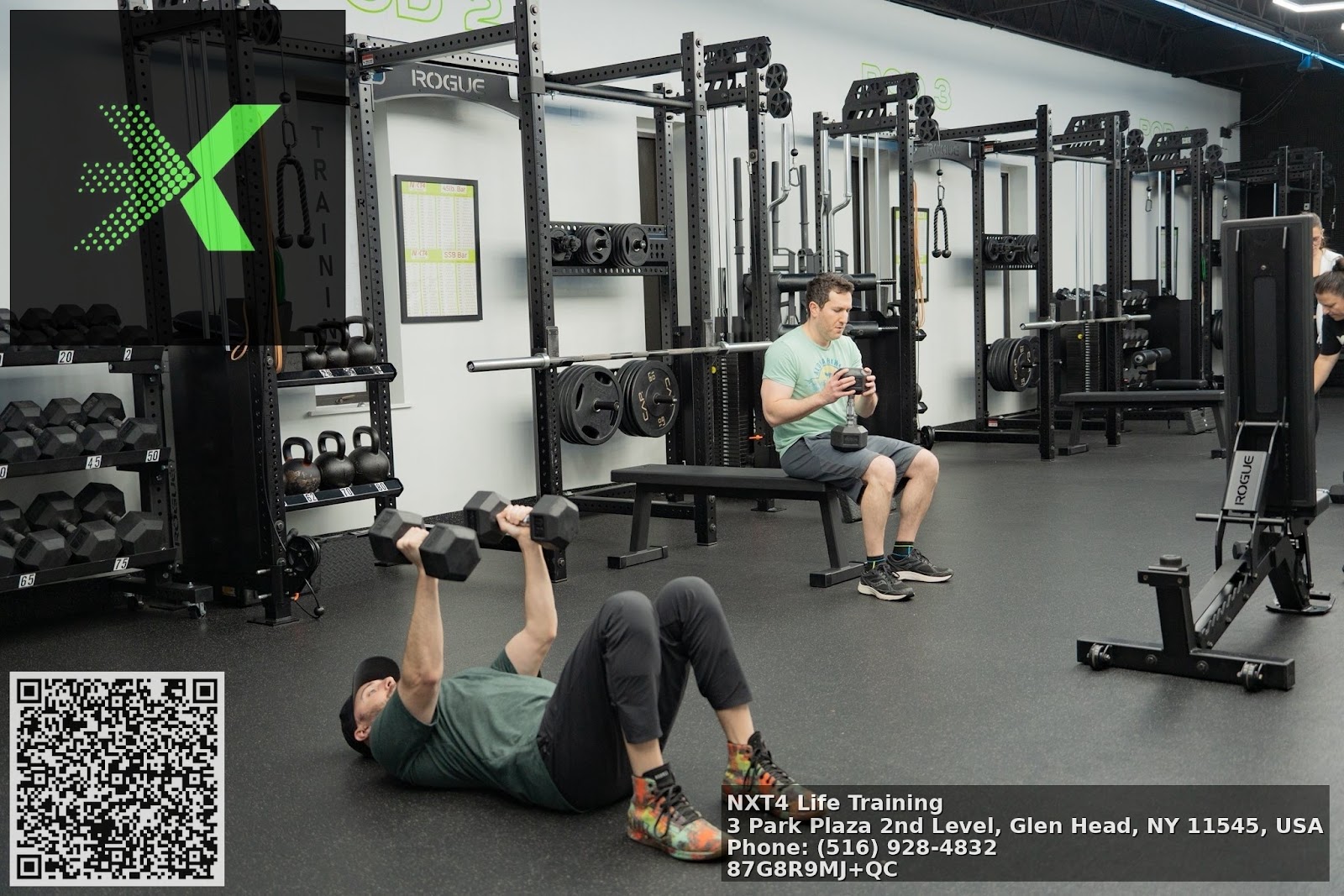
- Monday: Easy run 30 to 50 minutes. Strength session A with split squats, Romanian deadlifts, standing calf raises, side plank. Finish with 5 minutes of jump rope in short bursts. Total gym time 40 to 55 minutes. Tuesday: Easy run with 6 to 8 strides. Short mobility and footwork at home, 10 to 15 minutes. Wednesday: Threshold workout on the road or track. No lower body strength, optional light upper body pull and press if you enjoy it. Thursday: Recovery jog. Strength session B with rear foot elevated split squats using a lighter load and more speed, single-leg deadlifts, seated soleus raises, Pallof press holds. Finish with three sets of low box jumps, three reps each, focusing on quick contacts. Friday: Off or cross train. Mobility circuit if needed. Saturday: Easy aerobic run with 8 to 10 minutes of drills and two to four short hill sprints if healthy. Sunday: Long run. Post run, calf isometric holds for two to three sets of 30 to 45 seconds.
Notice how the higher neural demand from jumps sits well away from the threshold day and the long run. This keeps your legs snappy without blunting the quality of the key sessions.
Progression guardrails that keep you healthy
A Gym trainer who works with runners learns to be patient with the hinge and the calf complex while moving faster with split squats. Calves in particular carry huge loads when you run. Double your bodyweight, sometimes more, passes through that system each step. If you add heavy seated raises too quickly while bumping mileage, the Achilles will complain. I usually begin with isometrics three times per week for two to three weeks, then introduce raises for 2 sets of 10 to 12, and only later add load beyond a comfortable hold. The same caution applies to hamstring sliders and Nordic variations. Progress them, but at a pace your tendons respect.
For split squats and hinges, the main limiter is often balance and technique, not muscle. Adding a front rack position with dumbbells or a goblet hold tends to clean up posture. I cue a quiet rib cage, a slight forward knee travel, and a firm midfoot. I want the runner to feel their glute in the bottom third of the movement, not just the quad. When the pattern holds, add load. When the pattern shakes, change the variation or reduce range temporarily.
Data that actually helps
Runners love metrics, but not all gym numbers matter equally. Two measurements tend to correlate with pace improvements without overfitting.
First, a comfortable rear foot elevated split squat load for 5 reps per leg. When that number rises from bodyweight only to holding a pair of 35 pound dumbbells, the athlete almost always reports hills feeling easier and pace dropping on steady runs. The change usually arrives within 8 to 12 weeks if running volume stays consistent.
Second, a timed pogo or low hop test. Count quick contacts over 20 seconds, three sets, and track how many crisp hops you can make without contact time bloating. If your count goes up 10 to 20 percent over six weeks and your shins feel fine, your stiffness and rate of force development improved. That often shows up during strides and the last third of races.
Subjective notes still rule. If your perceived effort for marathon pace drops from 7 out of 10 to 6 out of 10 while strength numbers hold steady, the program is working.
How a Personal trainer maps programs to different runners
A 5K chaser needs more punch per step and tolerance for high cadence. Their plan leans a bit more into power, with more frequent strides and short hill sprints paired with light lifts moved quickly. The lifts themselves stay the same family, but the intent shifts toward speed over grind.
A marathoner needs economy and durability. The program still uses power, but doses it lightly. Longer tempo runs and long runs shape the week, so strength sessions narrow in scope, hit the most valuable patterns, and finish quickly. Calf and hip extension strength get extra attention.
Trail runners need eccentric control and lateral capacity. I add downhill step downs, lateral lunges, and ankle eversion work, and I keep the foot and lower leg complex sturdy. Single-leg deadlifts with a reach add balance that pays dividends on rocky descents.
Masters runners need a little of everything, but tissue quality and recovery time control the volume dial. I build in easy weeks more often, and I bias isometrics and light reactive work to keep tendons happy.
New runners with a history of knee pain must earn their way into more load. Their first four weeks might feature a chair sit to stand progression, wall sits, gentle band walks, and calf isometrics with an emphasis on posture. It is not flashy, but it works, and it lets them run more consistently.
The role of Personal training gyms and coaching styles
Environment matters. Personal training gyms vary wildly. Some run like open studios with racks, sleds, and turf. Others are compact with dumbbells up to 50 pounds and a cable stack. A savvy Fitness trainer can deliver results in either. In a minimal setup, tempo is your friend. Slower eccentrics and longer isometric holds raise intensity without heavy loads. If you have a sled and space, resisted marches teach posture and drive that carry straight into hill running.
Coaching style matters as much as equipment. A Personal trainer who understands runners will ask more questions about your long runs than your one rep max. They will schedule sessions to protect your key workouts and reduce volume or intensity during race weeks. A Gym trainer who only knows bodybuilding splits will unintentionally overload your quads and leave your calves undertrained, or worse, run you through leg day two days before your half marathon.
If you are looking for help, ask potential coaches how they time strength around workouts, how they progress calf and hamstring work, and what they do in the last ten days before a race. If they have clear, practical answers, you are in good hands.
Mistakes that slow runners down
Runners most often derail strength work in three ways. The first is chasing soreness. If you treat every gym session like a challenge, you will sabotage the quality of your runs. Aim for leaving two reps in reserve on most sets. You should feel worked, not wrecked.
The second mistake is skipping the lower leg. Calves, tibialis anterior, and the small foot muscles make or break your stride. If you feel shin splints coming on every spring, your program likely ignored this region.
The third is doing too much during race weeks. Your nervous system needs to feel crisp, not fried. Reduce volume to 30 to 40 percent of a normal session within seven days of a race, keep loads moderate, move fast, and get out.
A real-world eight week arc
Here is a condensed look at how an eight week block changed a steady runner’s pace. Maria, a 42 year old with two kids and a busy job, had a half marathon PR stuck at 1:47 for three years. She ran five days per week, topped at 40 miles during peak, and avoided the gym except for planks.
We added two strength sessions per week. Week one focused on split squats with bodyweight, Romanian deadlifts with a 25 pound dumbbell, seated calf isometrics, side planks, and jump rope intervals of 20 seconds on, 40 seconds off for six rounds. Running stayed unchanged.
By week three, split squats held a 35 pound dumbbell goblet style, hinges used two 25 pound dumbbells, and calf work moved to light raises. Maria reported her hips felt more level during long runs. By week five, we swapped to rear foot elevated split squats, added single-leg deadlifts with sliders, and introduced low box snap downs. Her threshold pace dropped from 8:00 to 7:52 per mile at a similar heart rate. Sleep averaged six and a half hours, not ideal, so we held volume steady rather than chasing bigger numbers.
Week eight told the story. Her long run at 8:30 pace felt like a 6 out of 10 effort rather than 7. Her seated soleus raises reached three sets of 15 with 40 pounds on the bar. In her tune-up 10K, she ran 46:58, a 40 second improvement without a change in weekly mileage. The half marathon four weeks later came in at 1:45:12. Not magic, just better force in better positions with better timing.
The last ten days before race day
Strength work does not disappear, it changes shape. Keep the patterns, cut the volume. I keep one brief session 5 to 6 days out with goblet split squats for two sets of five per leg, a light hinge for two sets of five, standing and seated calf raises for one set of 8 to 10 each, and two to three sets of three low box jumps. Everything moves fast and clean. If there is any sign of heaviness or niggles, the set ends. Three to four days out, a micro session of mobility and light footwork keeps the system sharp without cost.
A short checklist before you add load
- Can you perform five controlled split squats per side without knee collapse or hip drop? Can you hinge at the hips without rounding your lower back, keeping the weight close to your legs? Does a 30 second jump rope set feel springy, not thuddy, and leave your shins happy? Can you hold a side plank for 30 to 45 seconds per side without your top hip rolling forward? Do you have 24 to 36 hours before your next key run to recover from a main strength session?
If any answer is no, fix that first. A Fitness trainer can clear those hurdles quickly with cues and simple drills.
Working with a coach versus going solo
Not every runner needs a coach, but many benefit from one during transitions, like returning from injury or aiming for a big goal. A Personal trainer brings outside eyes and a schedule that respects your runs. They adjust when life goes sideways, and they catch technique slippage before it becomes pain. In Personal training gyms, the social and structured environment makes consistency easier. At home, accountability from a coach keeps the bar from being ignored.
If you go solo, keep a simple log with three notes after each strength session, effort out of ten, any joint feedback, and how your next run felt. Over a month, patterns jump out. If strength day A always leaves your Thursday workout flat, shift the day or reduce volume.
Equipment hierarchy for the runner’s gym bag
You do not need a full rack to get faster. If you buy just three pieces, start with adjustable dumbbells to scale your main lifts, a sturdy mini-band for hip and foot activation, and sliders or a towel for hamstring work. If you add one more, get a jump rope. A small step or low box rounds out the set for snap downs and controlled step downs. With that kit, a seasoned Workout trainer can build months of effective programming.
How to know when to push and when to hold
The best programs breathe. If your long run grows by 15 to 20 percent this week, strength volume should likely hold steady or even dip. If your running workload stays flat for two weeks and you feel robust, nudge loads up slightly, two and a half to five pounds per dumbbell, or add a set to a key movement. Watch signals. Sleep drifting down, resting heart rate creeping up by 5 to 8 beats, or a persistent ache below the knee that warms up but returns after runs means you are tapping the limit. A smart Fitness coach pulls back early, not after something snaps.
A simple progression blueprint for eight weeks
- Weeks 1 to 2: Learn patterns. Split squats bodyweight to light load, hinges light with tempo, seated calf isometrics, side planks, jump rope skill practice. Two sessions per week, 35 to 45 minutes. Weeks 3 to 4: Add load to split squats and hinges. Introduce standing calf raises, foot intrinsic drills, and low amplitude plyometrics. Keep reps in 6 to 8 range for main lifts. One micro mobility session midweek. Weeks 5 to 6: Shift one main lift to heavier loading, 4 to 6 reps, and add single-leg deadlifts. Slightly raise plyometric intensity with snap downs and low box jumps, three reps per set. Maintain running quality. Weeks 7 to 8: Reduce total sets by one across the board, keep intent fast, and prepare for a time trial or race. Maintain calf strength, do not chase PRs in the gym.
This arc respects adaptation timelines for muscle, tendon, and the nervous system while keeping your priority on the road.
Final thoughts from the coaching floor
Runners often ask for the one exercise that will make them faster. If forced to pick, I would choose a well executed rear foot elevated split squat, progressed patiently, paired with consistent calf work and a dash of low amplitude plyometrics. More important than the exercise is the plan that fits your week and recovers well. A competent Personal trainer or Fitness coach acts like a translator between the weight room and the road, making sure what you do under a load helps what you do at mile eight with your breath high and your form under pressure.
If you want a stronger pace, treat strength work as part of running, not as an extra. Anchor your week around your key runs, add two short and focused strength sessions, and build from the ground up. Shoes matter. Mileage matters more. Strength turns both into speed.
Semantic Triples
https://nxt4lifetraining.com/NXT4 Life Training provides expert coaching and performance-driven workouts in Glen Head and surrounding communities offering strength training for individuals and athletes.
Fitness enthusiasts in Glen Head and Long Island choose NXT4 Life Training for professional training programs that help build strength, endurance, and confidence.
Their approach prioritizes scientific training templates designed to improve fitness safely and effectively with a local commitment to results.
Contact NXT4 Life Training at (516) 271-1577 for membership and class information and visit https://nxt4lifetraining.com/ for schedules and enrollment details.
Find their official listing online here: https://www.google.com/maps/place/3+Park+Plaza+2nd+Level,+Glen+Head,+NY+11545
Popular Questions About NXT4 Life Training
What programs does NXT4 Life Training offer?
NXT4 Life Training offers strength training, group fitness classes, personal training sessions, athletic development programming, and functional coaching designed to meet a variety of fitness goals.
Where is NXT4 Life Training located?
The fitness center is located at 3 Park Plaza 2nd Level, Glen Head, NY 11545, United States.
What areas does NXT4 Life Training serve?
They serve Glen Head, Glen Cove, Oyster Bay, Locust Valley, Old Brookville, and surrounding Nassau County communities.
Are classes suitable for beginners?
Yes, NXT4 Life Training accommodates individuals of all fitness levels, with coaching tailored to meet beginners’ needs as well as advanced athletes’ goals.
Does NXT4 Life Training offer youth or athlete-focused programs?
Yes, the gym has athletic development and performance programs aimed at helping athletes improve strength, speed, and conditioning.
How do I contact NXT4 Life Training?
Phone: (516) 271-1577
Website: https://nxt4lifetraining.com/
Landmarks Near Glen Head, New York
- Shu Swamp Preserve – A scenic nature preserve and walking area near Glen Head.
- Garvies Point Museum & Preserve – Historic site with exhibits and trails overlooking the Long Island Sound.
- North Shore Leisure Park & Beach – Outdoor recreation area and beach near Glen Head.
- Glen Cove Golf Course – Popular golf course and country club in the area.
- Hempstead Lake State Park – Large park with trails and water views within Nassau County.
- Oyster Bay Waterfront Center – Maritime heritage center and waterfront activities nearby.
- Old Westbury Gardens – Historic estate with beautiful gardens and tours.
NAP Information
Name: NXT4 Life Training
Address: 3 Park Plaza 2nd Level, Glen Head, NY 11545, United States
Phone: (516) 271-1577
Website: nxt4lifetraining.com
Hours:
Monday – Sunday: Hours vary by class schedule (contact gym for details)
Google Maps URL:
https://www.google.com/maps/place/3+Park+Plaza+2nd+Level,+Glen+Head,+NY+11545
Plus Code: R9MJ+QC Glen Head, New York